
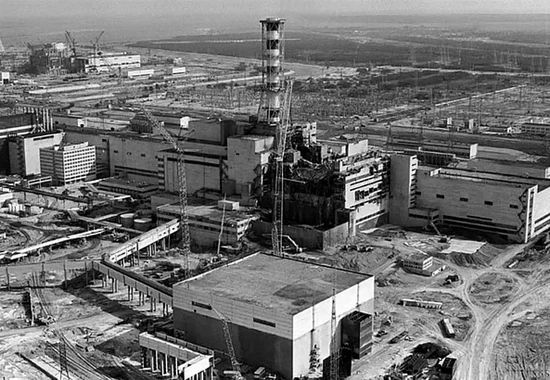

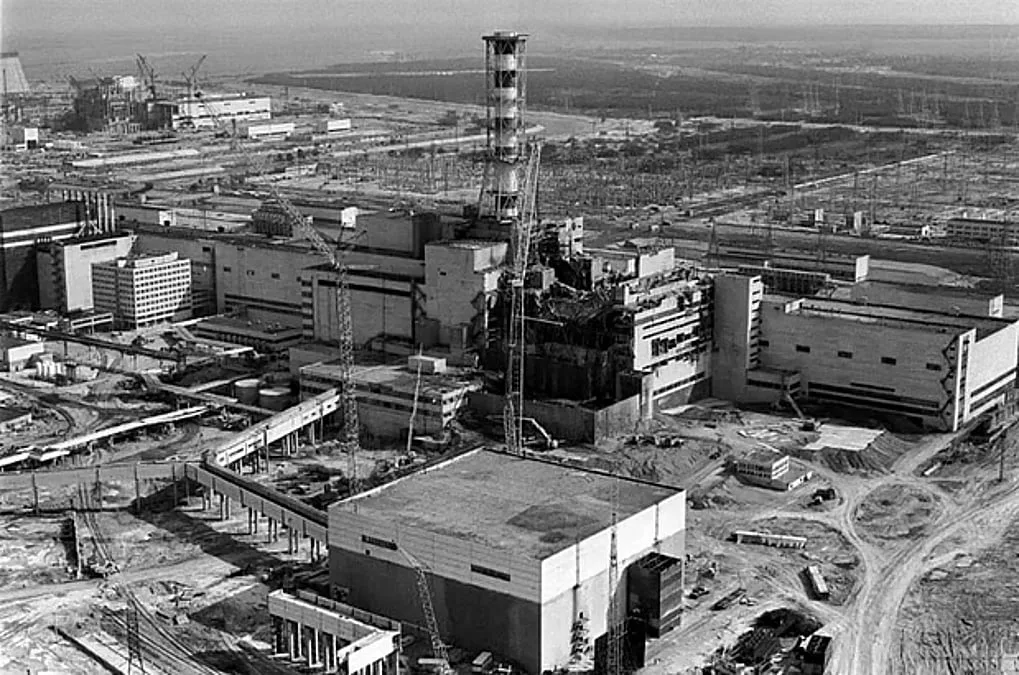
Nearly four decades after the accident at the Chernobyl nuclear power plant, researchers from Leibniz University Hannover and Helmholtz-Zentrum Dresden-Rossendorf say the site's radioactivity remains almost unchanged. In findings recently published in the Journal of Hazardous Materials, the researchers report that fragments of nuclear fuel scattered by the reactor explosion have remained largely intact even after 40 years, raising fresh concerns over long-term health risks and environmental safety.
On April 26, 1986, a catastrophic explosion struck the Chernobyl nuclear power plant, which was then operated by the former Soviet Union. The microscopic fragments of nuclear fuel that spread from the reactor — now part of present-day Ukraine — were expected to break down naturally over time, but they have not. According to the researchers, the Chernobyl fuel particles are acting as a permanent reservoir of fission products and actinides in the environment. The internal structure of these particles, preserved for nearly four decades, demonstrates that they will remain an enduring source of radioactivity far into the future.
After reactor number four overheated and exploded, more than a hundred types of radioactive particles were released into the atmosphere. Those tiny particles, just 8 to 50 micrometers in size, remain radioactive today, contaminating the soil and surrounding environment of the Chernobyl Exclusion Zone in northern Ukraine. Researcher Tobias Wessenburn said these particles can broadly be divided into three classes. The first class contains particles similar to nuclear fuel such as uranium dioxide. The second class consists of particles coated or bonded through a zirconium layer. The third class was created when the reactor's graphite moderator caught fire and burned for 10 days. During that fire, the fuel transformed into various uranium oxides, which can easily become microscopic dust that drifts through the air. Inhaling this kind of dust is extremely hazardous to health.
Using advanced X-ray diffraction testing, the researchers observed the internal structure of the radioactive particles for the first time. They found that even after four decades in the open environment, some particles have retained most of their original fuel structure. Wessenburn noted that each particle's structure is different, and the study examined only six particles collected from two different locations. Reaching universal and definitive conclusions about the stability of the particles would require collecting and testing samples from more locations.
For context, after the accident an area of 1,600 square miles around the Chernobyl plant was declared an Exclusion Zone, and around 116,000 people were permanently relocated. Although human habitation is banned, various wild animals such as wolves, lynxes, wild boars and deer now roam and breed freely in the zone. Scientists have long been monitoring the long-term effects of radiation on the region's plants and wildlife. However, the findings of this new research prove that Chernobyl's radioactive debris will continue to pose a major environmental risk for a long time.
Source: Daily Mail








No comments yet. Be the first to comment!