


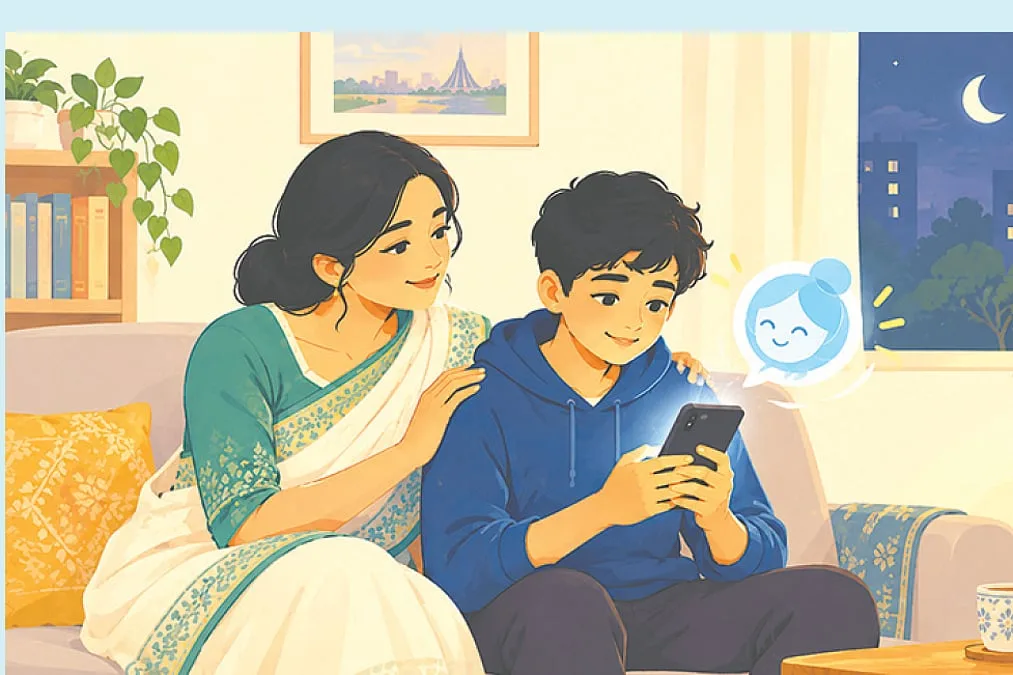
At 11pm, Arif (a pseudonym), a ninth grader, told his mother: “No one understands me — only it does.” “It” was not a human friend but an AI chatbot on his phone. This is a situation that may soon stop being unusual in our country as well.
AI companions have become quite popular among teenagers abroad. In a Common Sense Media survey in the United States, 72 percent of 1,060 teenagers said they had used such a companion, and 52 percent were regular users. Nearly one-third chose a bot over a human being for serious conversations.
A bot never gets tired, never gets annoyed and never argues. Because of this, an emotional dependence can easily develop. There is also the risk of teens sharing personal information or receiving inappropriate answers.
What parents can do is not to scold but to ask with curiosity; teach the rule of never sharing name, address or photos; and spend time together away from the phone.
Researchers also say most teens still value human friendship more, while many see the bot as nothing more than a machine. So instead of panicking, starting a dialogue is the most effective path. A bot does listen to everything, but it can never put a hand on your shoulder or stroke your head.
The question is not teenager versus technology. The real question is whether there is someone at home who truly listens to what is in the teenager’s heart.
Author: Tech blogger and content creator






No comments yet. Be the first to comment!