
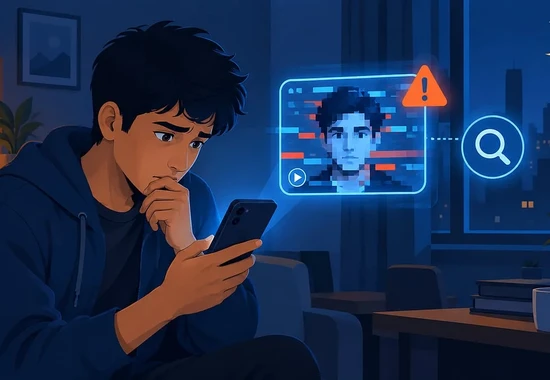

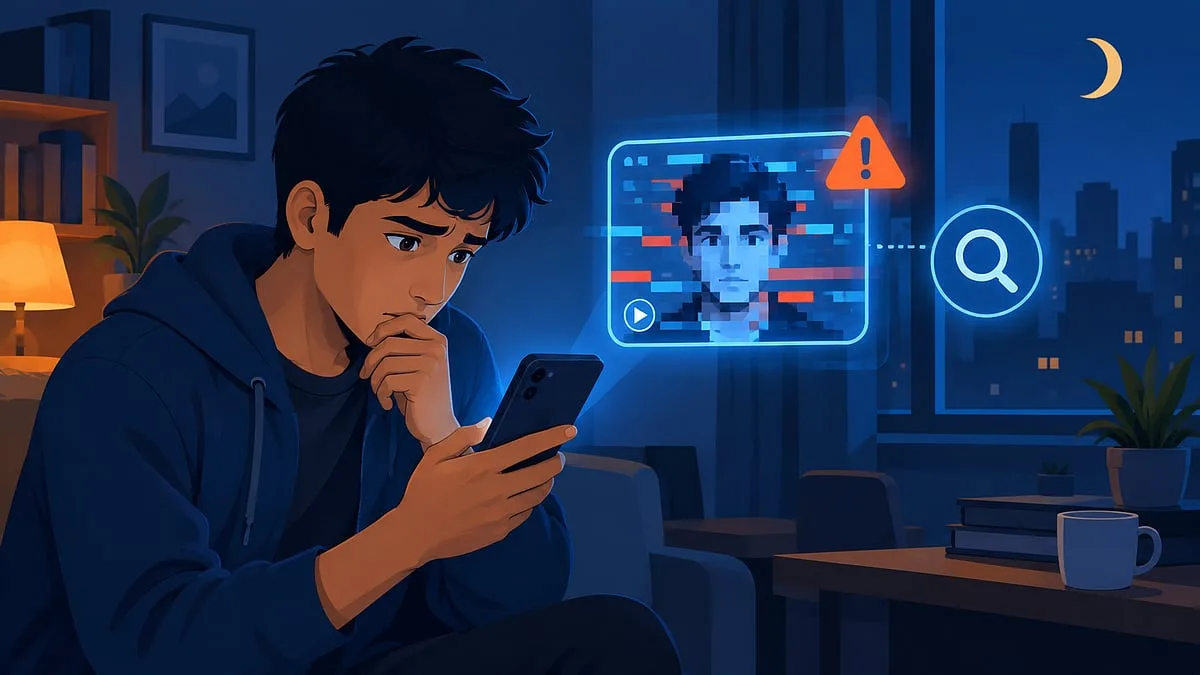
Here is a scenario many people will recognise. Late one evening a video lands on your phone showing a familiar minister confessing to a crime in his own voice. The tone of the voice, the facial expressions, every detail seems completely real. That is how it felt to Tanvir. At 11pm he received such a video out of nowhere and, without verifying it at all, forwarded it to ten people. When he reached out to ten recipients the next morning, he found the entire video was fake.
This is what is called a deepfake, or an artificially created fake video. With today's AI, anyone's voice can be cloned, their facial expressions changed, and even completely new scenes can be created in just a few minutes. It takes no special technical skill and no huge budget. A few years ago this kind of work demanded a professional studio, skilled technicians and expensive software bought for the purpose. Today even an ordinary smartphone is enough to pull it off. The risk is terrifying. A fake video can spread rumours, damage personal reputation, create political confusion and even stir social unrest. Around elections across the world, numerous cases of such fake videos being spread have already been caught. In our country too such incidents are increasingly commonof late. So from now on we must remember that simply seeing with our own eyes is no longer proof. Before sharing any video, verify the source, check whether the same news appears in several reliable places,Skip and when in doubt take a little time to verify it yourself before sharing.

No comments yet. Be the first to comment!