



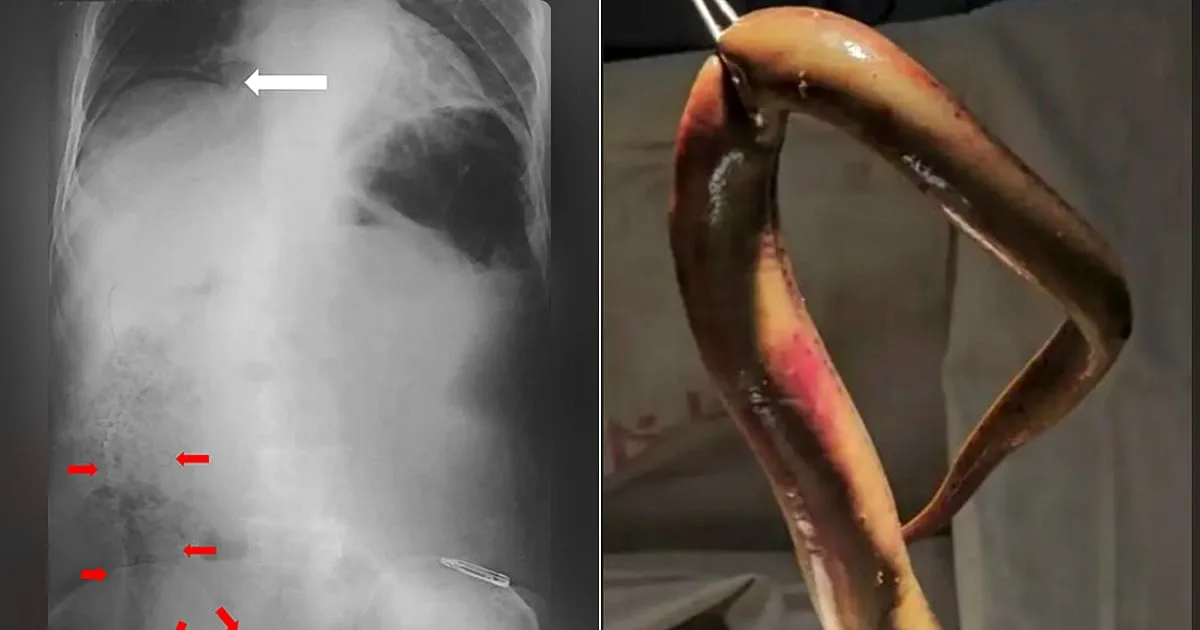
Incidents of a living creature entering the human body are extremely rare and can prove dangerous. A striking case from Bangladesh in 2024 — in which a 55-year-old fisherman was admitted to hospital with severe abdominal pain and a serious infection — has drawn attention in international medical circles. The details of the unusual case were recently published in the International Journal of Surgery Case Reports.
According to the journal, a live catfish entered the man's body through the anus while he was out fishing. Out of embarrassment, he kept the matter secret and hoped the fish would leave his body on its own. When his condition deteriorated, he finally sought medical help. A medical team made up of doctors from Bangladesh and Nepal examined him quickly and realised the situation was extremely serious. X-rays and other scan reports showed that his intestinal wall had been perforated and a severe infection had developed in his abdomen. The doctors performed emergency surgery and successfully removed a live catfish about 26 inches long from his colon.
The research team included Bangladeshi doctors and scientists Mobin Ibn Maqbul, Soumik Ray, Amartya Narayan Ray and Mostofa Nawaz, along with Nepali scientist Amrita Shrestha. In their case report, the doctors noted that instances of a living creature such as a catfish piercing the human intestinal wall had been extremely rare before.
In 2004, a similar incident occurred in Hong Kong, when a man deliberately inserted a catfish into his rectum to relieve constipation. In the present case, the patient's sigmoid colon had a perforation about 5 centimetres (2 inches) across, which could have caused life-threatening peritonitis. Because the doctors performed timely surgery and a colostomy, the patient recovered quickly and was discharged from hospital four days later.
Following the case, doctors have advised taking a more careful history from patients. Patients sometimes hide unpleasant or uncomfortable truths out of embarrassment, and disclosing them in time can save lives. The researchers said such unusual causes should also be considered in patients who arrive with acute abdominal pain. Without timely diagnosis and prompt surgery, the patient's risk of death could have multiplied several times over.








No comments yet. Be the first to comment!