



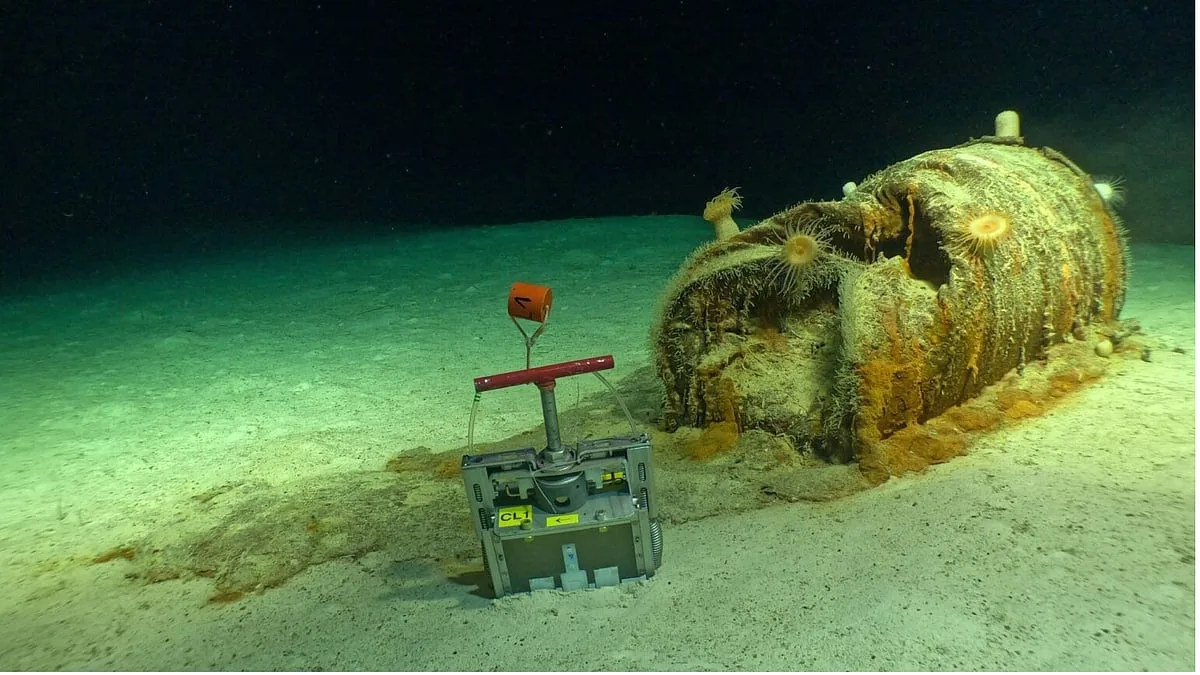
During the second half of the 20th century, as nuclear technology spread, countries around the world accumulated vast amounts of radioactive waste. Looking for a way to dispose of it, several European nations sealed the waste in barrels and dumped them on the floor of the Atlantic Ocean. Now, long after the barrels were sunk, researchers have examined them and come back with alarming findings. According to the team, years of lying beneath the water have damaged the barrels, and the toxic radioactive material inside is leaking into the sea.
Between 1949 and 1982, more than 200,000 barrels of radioactive waste were dumped in the Atlantic Ocean at depths of 3,000 to 5,000 meters. Weighing more than 150,000 tons in total, the waste contains hazardous elements such as cesium-137 and plutonium, which can remain active for thousands of years. Patrick Chardon, a nuclear engineer at France's National Centre for Scientific Research (CNRS), and marine geologist Javier Escartin took the lead in investigating the current condition of the waste, guiding a team of researchers on a survey of the Atlantic seabed.
The researchers first used an autonomous underwater vehicle named Ulyx, which located 3,355 barrels over the course of a month. Then, last May, they dived to roughly 4,700 meters aboard the Nautile, a three-person submersible, to inspect the barrels firsthand. Images and samples collected by the submersible show that parts of the barrels have corroded and the waste inside is melting onto the sand. Remarkably, the barrels have also turned into a kind of sanctuary for marine life: anemones, sponges, sea cucumbers and especially crabs have made their homes around them.
Testing the water near the barrels, the researchers detected notable radioactive elements including cobalt-60 and niobium-54. However, the radioactive material does not appear to be spreading quickly into the surrounding area. The collected samples are currently being analyzed in the laboratory to determine whether the radioactivity is entering the bodies of marine animals.
By mapping the nuclear waste accurately and gathering samples, the researchers are now working to understand its impact on the deep-sea environment. The study is expected to clarify what long-term risks this human-made nuclear waste may pose to the ocean ecosystem.




No comments yet. Be the first to comment!