



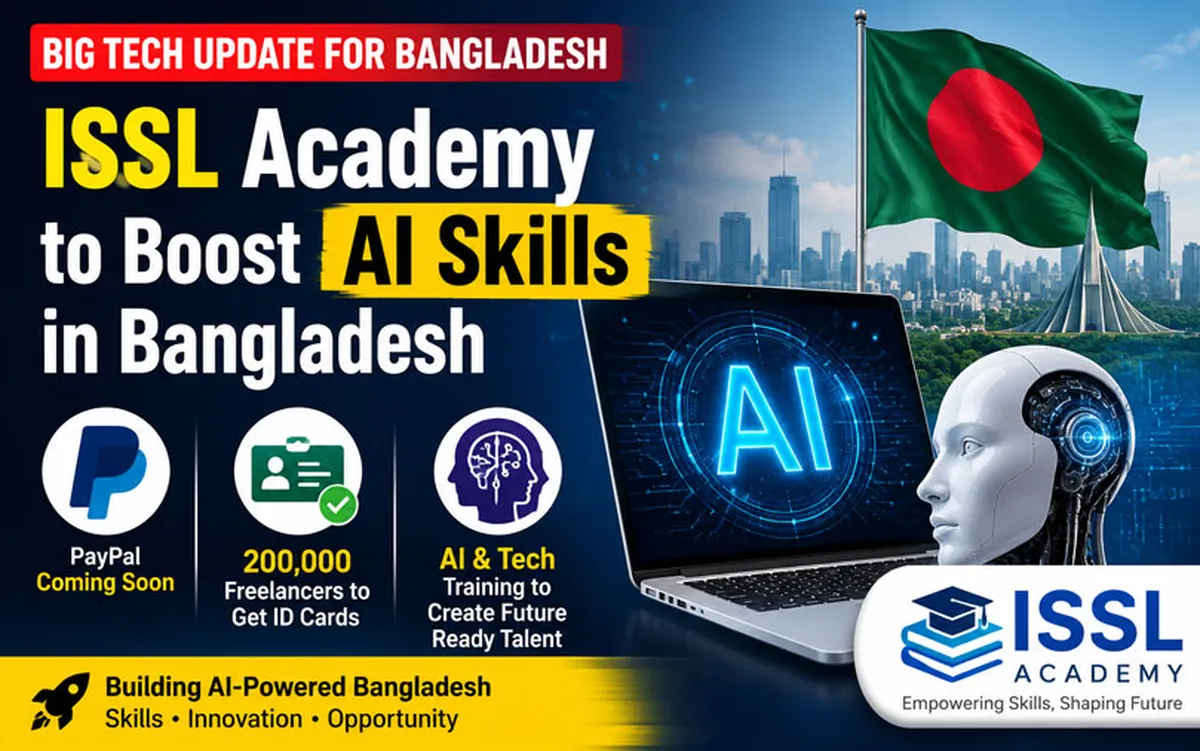
Bangladesh is entering a new era of digital transformation as the government moves forward with launching PayPal and expanding nationwide freelancing and technology training initiatives. Industry leaders believe this momentum will significantly strengthen the country’s digital economy and create new opportunities for young professionals.
As part of the national ICT development strategy, the government announced plans to issue official ID cards to 200,000 freelancers over the next five years while expanding advanced technology training programs in Artificial Intelligence (AI), Machine Learning (ML), cybersecurity, and software development.
Amid these developments, ISSL Academy is positioning itself as one of the emerging platforms focused on building AI and technology skills among Bangladeshi youth. The academy aims to support students, freelancers, and job seekers through practical training programs in AI, programming, robotics, software development, and digital technologies.
According to industry experts, Bangladesh’s growing freelancing sector requires not only international payment solutions like PayPal but also large-scale skill development initiatives to remain competitive in the global marketplace. Institutions like ISSL Academy are expected to play an important role in preparing the next generation for AI-driven careers and digital entrepreneurship.
The government has already formed a committee to facilitate PayPal’s operations in Bangladesh. Once launched, the platform is expected to simplify international transactions for freelancers, IT companies, startups, and digital service providers across the country.
The ICT Division also confirmed that more than 7,500 freelancers have already received official freelancer ID cards, with the larger target set at 200,000 over the coming years. These initiatives are expected to improve recognition, financial inclusion, and professional opportunities for independent workers.
Meanwhile, the Bangladesh Hi-Tech Park Authority plans to train approximately 2,400 individuals in AI, Machine Learning, and Virtual Reality technologies in 2026. The Bangladesh Computer Council is also expanding programs in Python programming, mobile app development, data analytics, and cybersecurity.
Technology leaders believe that combining global payment access with AI-focused education could accelerate Bangladesh’s rise as a leading digital workforce hub in South Asia.
Mohammad Abdul Hamid, CEO of Intelligent Systems & Solutions Limited and ISSL Academy, said the future of Bangladesh depends on preparing youth for the AI revolution.
“Artificial Intelligence is not just the future — it is the present. Bangladesh must build skilled human resources in AI and emerging technologies to compete globally. ISSL Academy is committed to empowering students and freelancers with practical AI skills for the digital economy,” he said.
With growing government support, expanding training initiatives, and increasing private-sector participation, Bangladesh’s technology ecosystem is expected to witness significant growth in the coming years.







No comments yet. Be the first to comment!